

It often starts without warning. A power plant failures (trips) unexpectedly and a Programmable Logic Controller (PLC) hang for no clear reason. Communication between panels drops intermittently, yet when engineers arrive on site, everything appears normal. No burnt cables, no visible faults, and no alarm points to a clear cause.
These are the failures that frustrate operations teams the most in a power plant, not because systems stop, but because they stop without explanation. In many modern power plant failures, particularly in a thermal power plant, the root cause of such issues lies not in mechanical failure or protection logic, but in something invisible: EMI and poor EMC control.
A concept called Electromagnetic Management Excellence covers two broad and closely related aspects: EMI (Electromagnetic Interference) and EMC (Electromagnetic Compatibility) are critical engineering concepts that ensure electronic devices operate properly without disrupting each other:
- EMI is the problem: Unwanted, unintended electromagnetic noise or signals that disrupt the operation of electronics
- EMC is the solution: The ability of a device to function properly in its environment without being affected by, or causing, unwanted EMI
As power plants become more automated, digitised, and interconnected, electromagnetic interference has quietly become one of the biggest threats to control system reliability. This challenge is commonly observed in large thermal power station environments where high electrical loads and dense control systems coexist. Understanding EMI EMC in Power Systems is no longer optional; it is essential for stable operations.
Understanding EMI in Power Systems

Electromagnetic Interference (EMI) refers to unwanted electrical disturbances that affect the regular operation of equipment. In a thermal power plant, EMI is no longer an exception; it is a by-product of how modern systems operate.
High-speed switching devices, such as VFDs, soft starters, UPS systems, switched-mode power supplies, and modern power electronics, generate electrical noise during regular operation. This makes EMI in industrial plants increasingly common. This noise travels either through conductors and earthing paths (conducted EMI) or radiates through the air as electromagnetic fields (radiated EMI).
In isolation, this noise may seem harmless. But in a power plant, when it couples into control cables, communication lines, or sensitive electronics, it can distort signals, corrupt data, or trigger false logic responses. The more automation a power plant adopts, the more EMI sources it unintentionally introduces into the system, thereby increasing EMI EMC challenges in Power Systems across the facility.
What Is EMC and Why Does It Matter in a Power Plant?
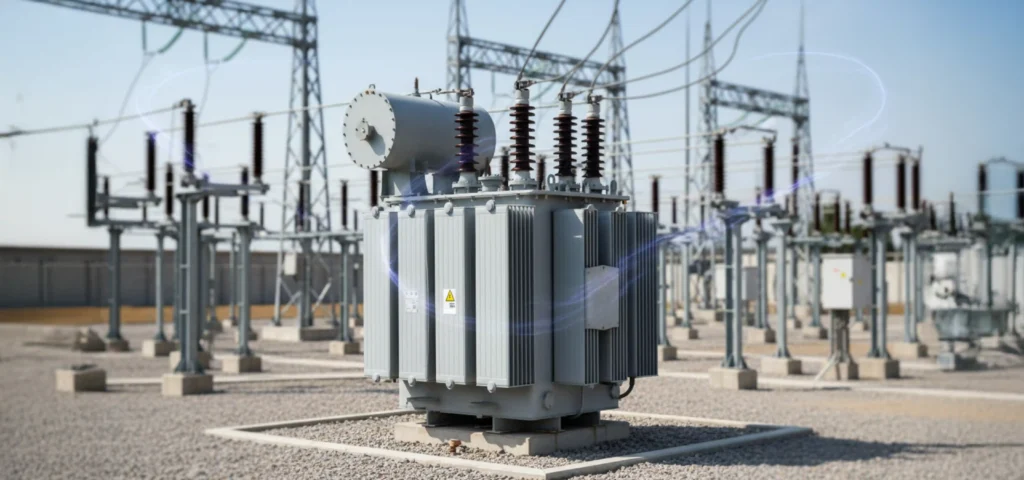
Electromagnetic Compatibility (EMC) is not the absence of EMI. Instead, it is the ability of equipment and systems in a power plant to function correctly in their electromagnetic environment without causing interference to other equipment or being affected by it.
In simple terms, EMI is the problem, and EMC is the discipline that prevents that problem from affecting power plant operations.
In industrial environments, EMC is often misunderstood as a product certification requirement rather than a system-level responsibility. While individual devices may comply with standards, a thermal power station may still experience EMC issues in control systems due to poor integration, grounding, bonding, and layout practices. This is one of the most common reasons EMI EMC in Power Systems remains unresolved despite the use of compliant equipment.
Why Control Systems Fail First in Power Plant Failures?
When EMI problems occur, control and protection systems in a power plant are usually the first to suffer. PLCs, DCS systems, SCADA networks, relays, and sensors operate using low-level signals that are highly sensitive to electrical noise. Even minor disturbances can lead to incorrect logic execution, communication errors, or unintended trips.
This is why power plants experience issues such as random PLC resets, intermittent communication dropouts, false relay operations, unexplained vibration alarms, and sensor readings that fluctuate without process changes. These are classic symptoms of EMC issues in control systems and persistent EMI in industrial plants, especially within a thermal power plant operating under continuous load.
These faults are complicated to diagnose in a power plant because they often disappear during inspections, only to return later under real operating conditions.
The Hidden Role of Earthing and Grounding in Power Plants
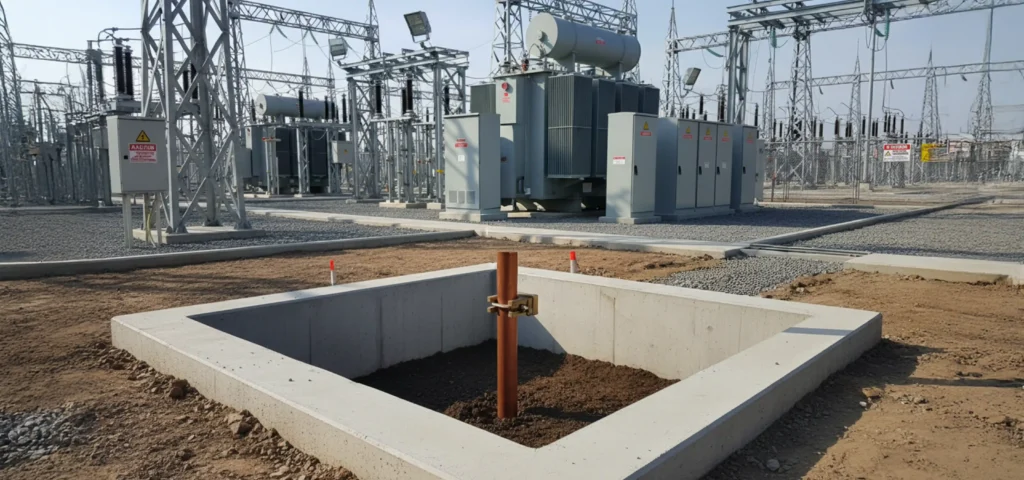
One of the most overlooked contributors to EMI problems in a power plant is earthing and grounding design. In many power plants, earthing is primarily designed to handle fault currents and meet safety requirements during commissioning. While this is essential, it is not sufficient for controlling EMI EMC in Power Systems.
EMI control requires functional earthing that provides a low-impedance path not only at power frequencies but also across a wide range of high frequencies. In practice, many thermal power plants suffer from high earth impedance at high frequencies, multiple and conflicting earth reference points, poor bonding between panels and structures, and earthing systems that degrade over time due to corrosion or changes in soil conditions.
When earthing and bonding are inadequate in a power plant, electrical noise has no controlled path to dissipate. Instead, it finds unintended routes through signal cables, communication shields, and control circuits, exactly where EMC issues in control systems cause the most damage.
Why EMI Issues Appear Years After Commissioning in Power Plants?
A common response from power plant teams is, “Everything worked fine during commissioning.” And they are often correct.
During commissioning, electrical loads in a power plant are limited, the environment is relatively clean, and temporary configurations may mask more profound EMC weaknesses. Over time, however, power plants evolve. Additional drives are installed. Cable routing is modified. New panels are added. Earthing connections age and loosen. Soil resistivity changes with seasons and moisture levels.
Each of these changes subtly alters the electromagnetic environment of the power plant. EMC margins slowly erode until the system reaches a tipping point where intermittent failures begin to appear. By then, EMI in industrial plants is no longer isolated; it is embedded across the facility, particularly in ageing thermal power station installations.
Engineering EMI and EMC the Right Way in Power Plants
A single corrective action does not achieve effective EMI control in a power plant. It requires a holistic engineering approach that integrates earthing, bonding, cable routing, shielding, panel design, surge protection, and noise control into a single system.
A proper grounding philosophy must be selected based on the power plant application, ensuring that sensitive and noisy systems are appropriately segregated. Power and control cables must be routed separately, with shielding applied correctly and terminated at the right locations. Bonding between metallic structures, cable trays, and enclosures must be continuous and intentional.
Transient protection devices, filters, chokes, and damping networks help control conducted noise, while shielding and enclosure practices reduce radiated interference. Communication systems in a power plant must be designed with correct termination, isolation, and noise tolerance to ensure data integrity even in harsh electrical environments. This systematic approach directly addresses EMI EMC in Power Systems.
How Manav Addresses EMI and EMC Challenges in Power Plant Failures?

At Manav, EMI and EMC are addressed as engineering problems, not operational surprises. The approach begins at the design stage of a power plant by identifying noisy and sensitive zones and planning segregation accordingly. Earthing and bonding systems are designed to provide low-impedance paths suitable for both safety and electromagnetic performance.
Manav’s solutions focus on reducing noise at the source, controlling how it travels, and protecting sensitive systems from its effects in a power plant. This includes proper cable management, robust grounding practices, surge and transient protection, shielding strategies, and verification through testing rather than assumptions, directly mitigating EMC issues in control systems.
By treating EMI control as part of long-term power plant reliability rather than a one-time compliance activity, Manav helps facilities avoid recurring EMI-related failures in industrial plants.
The Real Impact of Solving EMI at the Root in Power Plants
When EMI issues are addressed correctly in a power plant, the benefits are immediate and long-lasting. Control systems operate stably. False trips reduce. Data becomes reliable. Equipment life improves. Maintenance teams spend less time troubleshooting intermittent faults and more time focusing on optimisation.
Most importantly, power plant performance becomes predictable. Operators trust their systems again.

Conclusion
EMI problems rarely announce themselves in a power plant. They quietly disrupt operations, erode reliability, and create risks that are often misattributed to software or hardware defects. EMC is not a checklist item; it is a system-level responsibility that must be engineered into power plants from the ground up.
Power plants that invest in proper EMI EMC in Power Systems control today avoid costly failures tomorrow. At Manav, electrical safety and reliability begin by engineering invisible problems out, not patching them later.
– Author: Vigneshwaran S