
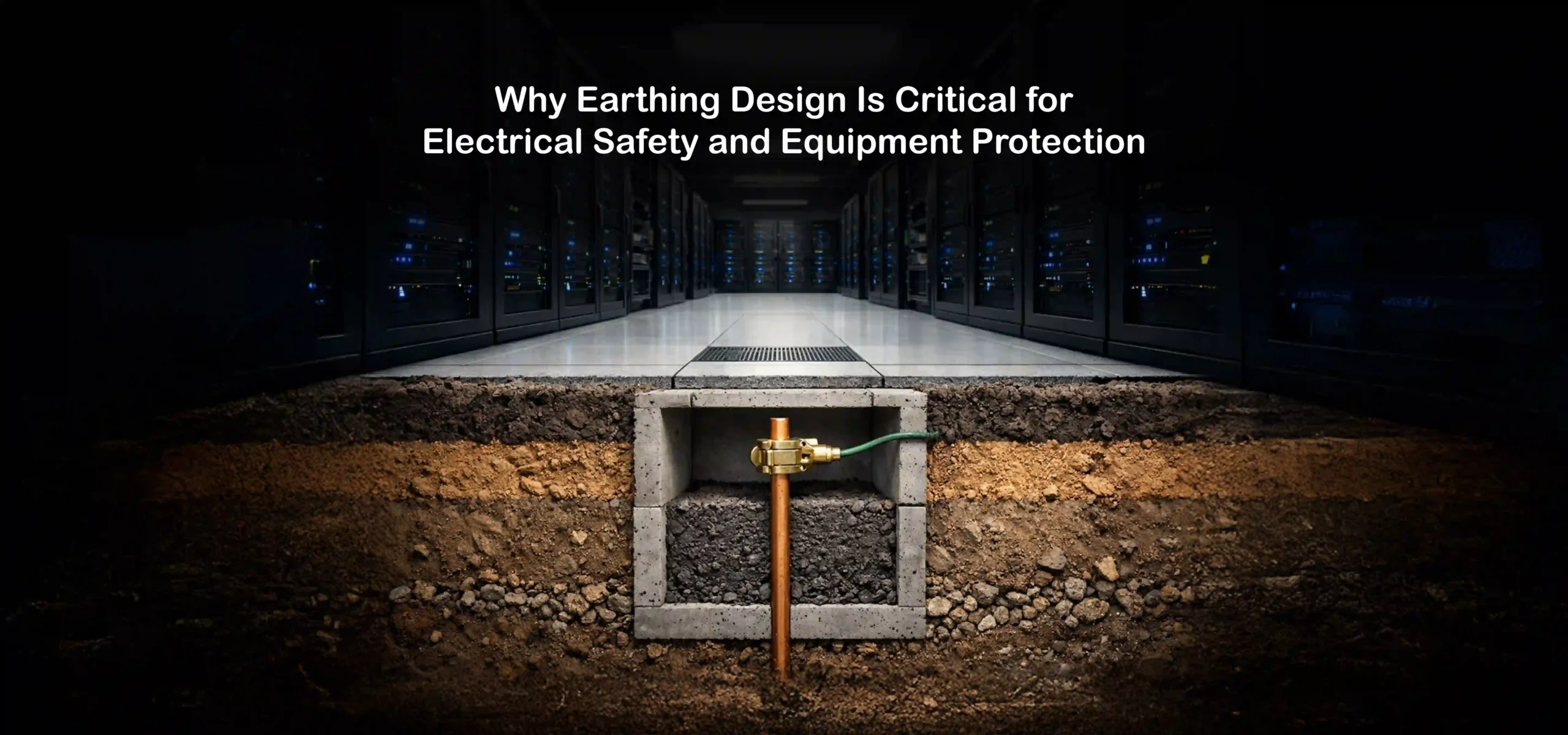
Earthing Design forms the structural backbone of every reliable electrical installation. In industrial environments where energy levels are high and operational continuity is essential the effectiveness of the grounding system determines how safely fault energy is dissipated into the earth.
A professionally engineered Earthing Design does far more than satisfy regulatory compliance. It establishes a controlled low-impedance path for fault current, stabilizes system voltage, minimizes transient disturbances, and strengthens long-term Equipment Protection. Without a structured grounding strategy, even well-designed electrical systems remain vulnerable to instability and safety hazards.
Understanding the Engineering Purpose
The primary objective of Earthing Design is to create a low impedance path between electrical equipment and the earth. During normal operation, this connection remains passive. However, when insulation breakdown, short circuits, or lightning events occur, the effectiveness of Earthing Design becomes critical. Without a defined discharge path, dangerous potential differences can appear on metallic structures, threatening Electrical Safety.
Grounding System Design ensures that protection devices operate quickly and selectively. By stabilizing voltage with respect to earth, Earthing Design prevents floating neutral conditions and reduces the probability of unpredictable system behavior. This engineering discipline ensures that fault current is managed rather than allowed to spread uncontrollably.
Earthing Design and Human Protection
Electrical Safety remains the primary justification for investing in professional Grounding System Design. When conductive parts become energized during a fault, touch voltage and step voltage can endanger personnel.
A well-calculated Earthing Design maintains these voltages within internationally accepted safety limits (as defined by IEC, IEEE, and other standards). Engineers assess soil resistivity, fault magnitude, grid geometry, and conductor sizing to ensure safe energy dissipation even under worst-case scenarios.
This disciplined engineering approach significantly reduces risk in substations, process plants, refineries, and heavy manufacturing facilities where high fault currents are common.
Soil Resistivity and Site Assessment
Every effective Earthing Design begins with soil investigation. Soil resistivity directly influences the earth’s ability to dissipate fault current. High-resistivity soil may require extended grounding grids, deep-driven electrodes, or chemical enhancement to achieve reliable Equipment Protection.
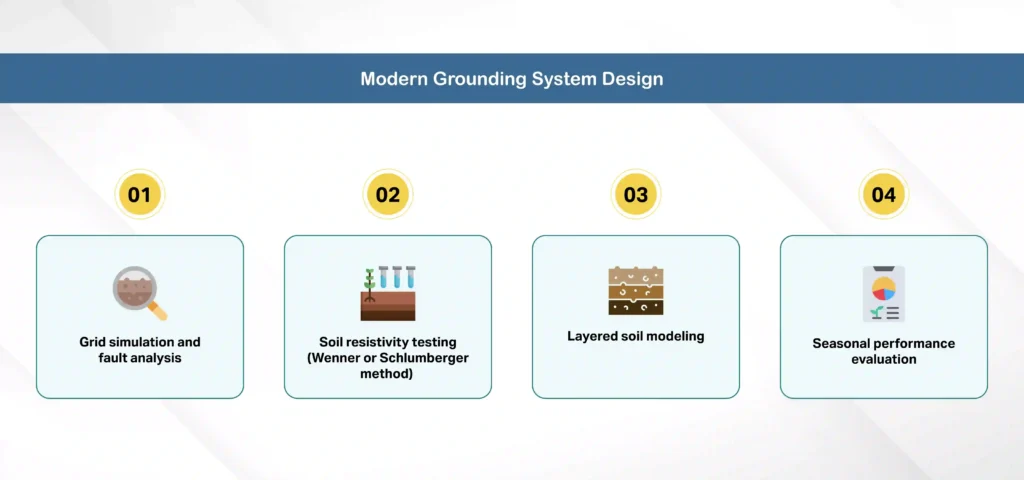
Ignoring soil characteristics can result in underperforming installations, elevated ground resistance, and compromised Electrical Safety.
Protection of Equipment and System Stability
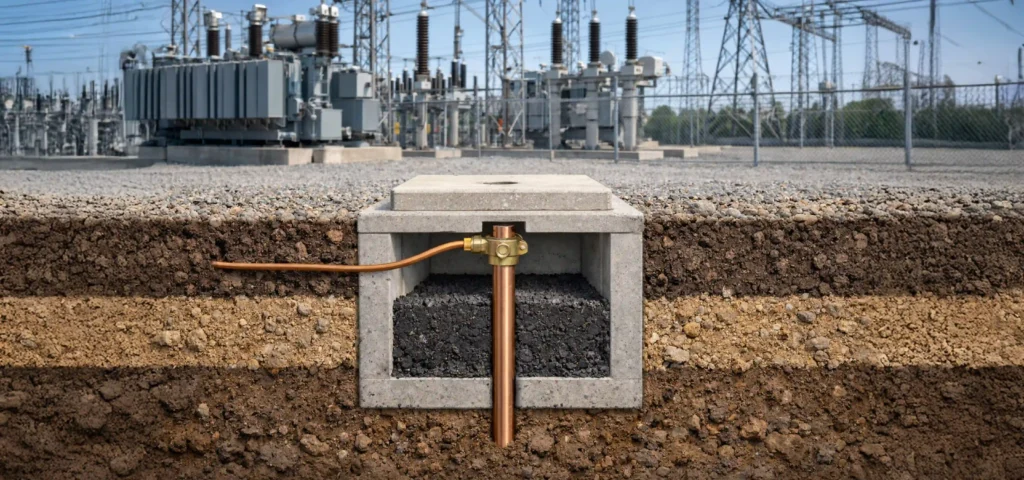
Industrial facilities rely on transformers, generators, motors, switchgear, protection relays, PLCs, and power electronics. A robust Earthing Design provides a stable voltage reference that enhances relay accuracy and improves Equipment Protection.
Poor grounding can lead to:
- Circulating currents
- Overheating
- Nuisance tripping
- Communication interference
- Premature equipment failure
By controlling transient overvoltages during switching and lightning events, a properly engineered grounding system extends asset lifespan and improves operational reliability.
Thermal and Mechanical Considerations
Fault conditions introduce intense thermal stress into conductors. Earthing Design must account for maximum short‑circuit current and duration to ensure conductors withstand heat without deformation. Engineers calculate permissible temperature rise to guarantee mechanical strength and long‑term durability.
Mechanical bonding between structural steel, cable trays, and equipment frames also supports Electrical Safety. Comprehensive Grounding System Design ensures continuity across all metallic parts, preventing voltage buildup that could compromise Equipment Protection.
Integration with Lightning and Surge Protection
Lightning energy can introduce extremely high impulse currents. Earthing Design integrates surge protection devices and bonding networks to distribute this energy safely. By providing multiple low‑impedance paths, Earthing Design minimizes localized stress and enhances Electrical Safety during extreme events.
Industrial facilities benefit from coordinated Grounding System Design that connects lightning protection systems with process equipment grounding. This integrated approach reinforces Equipment Protection and prevents cascading failures.
Operational Challenges from Poor Earthing
Deficiencies in Earthing Design often appear as unexplained equipment trips, overheating, or communication disturbances. Such symptoms may not immediately indicate grounding issues, yet inadequate Grounding System Design frequently lies at the root of instability.
When Earthing Design is weak, fault current may not clear rapidly. Delayed protection response compromises Electrical Safety and increases arc flash risk. Strengthening Earthing Design reduces these operational uncertainties and supports consistent Equipment Protection.
Maintenance and Lifecycle Management
Earthing Design should be treated as a lifecycle investment rather than a one-time installation. Over time, corrosion, soil drying, structural modifications, and environmental changes can alter grounding performance.
Best practices include:
- Periodic earth resistance testing
- Thermal inspections
- Bonding verification
- Compliance audits
Proactive monitoring ensures continued Electrical Safety, regulatory compliance, and sustained Equipment Protection throughout the facility’s operational life.

Strategic Value in Industrial Facilities
In sectors such as oil and gas, utilities, pharmaceuticals, and heavy manufacturing, downtime can result in significant financial impact. Earthing Design contributes directly to process continuity by reducing fault severity and protecting critical assets.
Organizations that prioritize professional Grounding System Design gain measurable improvements in Electrical Safety performance indicators. Enhanced Equipment Protection reduces repair costs, extends operational life, and improves system resilience.
Conclusion
Earthing Design is a foundational engineering discipline that underpins Electrical Safety, system stability, and long-term Equipment Protection. By integrating soil analysis, fault modeling, conductor sizing, surge coordination, and lifecycle maintenance, engineers create resilient electrical infrastructures capable of managing extreme conditions.
Facilities that treat Earthing Design as a strategic priority not only comply with standards but also safeguard personnel, protect investments, and ensure reliable industrial performance.
– Author: Vigneshwaran S