
In modern smart cities and advanced infrastructure hubs, tall buildings are more than steel and glass rising into the sky. They are homes where families gather, offices where businesses grow, hospitals where lives are saved, and hotels that welcome visitors from around the world.
Behind the beauty of these skylines lies something far less visible — yet far more essential: electricity.
Every elevator ride. Every cooled room during peak summer heat. Every illuminated corridor at night. All of it depends on carefully designed and precisely maintained electrical systems.
But what happens when war or regional instability disrupts energy infrastructure?
Even if conflict does not occur within national borders, its ripple effects can impact power supply, equipment availability, fuel logistics, and system reliability. In high-rise buildings, electrical disruption is not just inconvenient, it can quickly become a serious safety concern.
This is where Electrical Safety on War becomes an important discussion not out of fear, but out of preparedness.
Electricity: The Invisible Lifeline of Tall Buildings
Most residents rarely think about the electrical backbone of their building — until something goes wrong.
Yet electricity powers:
- Elevators transporting hundreds of people daily
- HVAC systems protecting occupants from extreme temperatures
- Fire alarms and smoke extraction systems
- Emergency lighting
- Water pumps and pressure systems
- Security and access control systems
In tall buildings, everything is vertically interconnected. A failure at one level can affect dozens of floors above.
Unlike smaller structures, high-rises cannot function safely without continuous and stable power. Electricity is not a luxury in these buildings — it is their lifeline.
Ensuring Electrical Safety on War scenarios means understanding how these systems behave under stress and disruption.
How War Disrupts More Than Just Borders?
When people think of war, they often imagine visible destruction. But modern conflicts increasingly target infrastructure — especially power systems.
The concept of Electrical Safety on War goes beyond battlefield damage. It focuses on how buildings remain safe, stable, and operational even during regional instability.
1. Damage to Power Grids
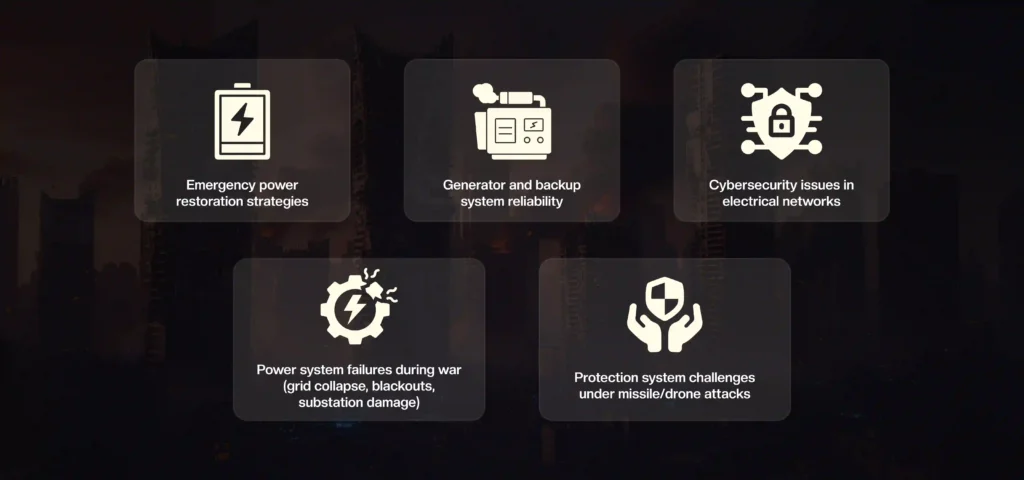
Electrical grids are strategic assets and often become targets in conflict zones. If transmission lines, substations, or power plants are damaged, entire regions can experience blackouts.
For tall buildings in smart cities, a grid failure may result in:
- Power system failures during war (grid collapse, blackouts, substation damage)
- Protection system challenges under missile/drone attacks
- Emergency power restoration strategies
- Generator and backup system reliability
- Cybersecurity issues in electrical networks
Backup generators are critical — but they are not designed for indefinite operation without proper fuel supply and maintenance access.
Planning for Electrical Safety on War includes realistic backup strategies, redundancy planning, and fuel risk management.
2. Fire and Electrical Chain Reactions
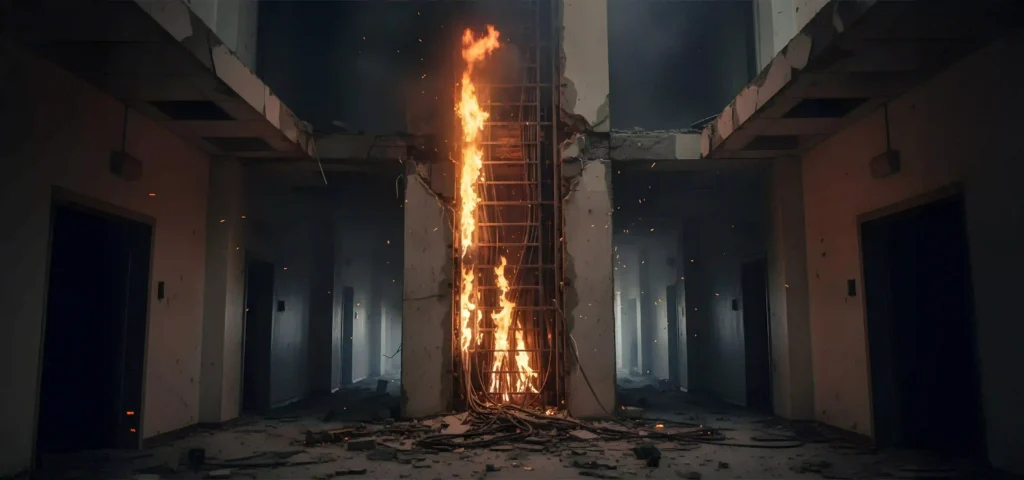
Explosions in surrounding areas can trigger fires that spread through cable pathways and service shafts.
Electrical systems are deeply interconnected. When insulation melts or panels are damaged, it can lead to:
- Short circuits
- Arc flashes
- Power surges
- Floor-level shutdowns
In high-rise buildings, vertical cable risers can act like channels, carrying smoke and heat upward and affecting multiple floors.
Electrical Safety on War situations require:
- Fire-rated cabling
- Proper compartmentalization
- Advanced protection coordination
- Reliable earthing systems
These measures prevent cascading failures across floors.
3. Voltage Instability and Equipment Damage
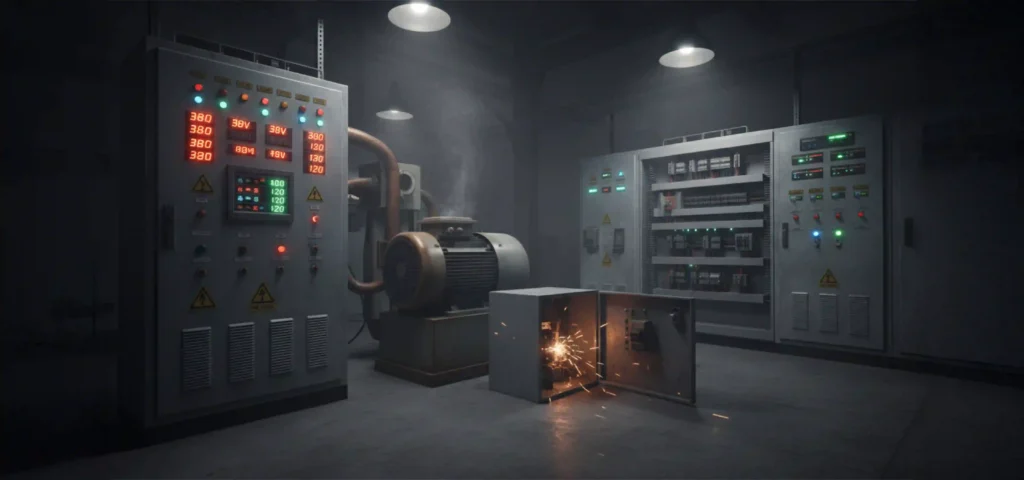
Even without direct physical damage, regional instability can affect power quality.
Voltage fluctuations and frequency disturbances can harm sensitive equipment such as:
- Chiller control systems
- Variable Frequency Drives (VFDs)
- Building Management Systems (BMS)
- Data servers
In smart infrastructure cities, cooling is not simply about comfort — it is about safety and operational continuity. Losing HVAC functionality during extreme heat can create serious health risks, particularly for elderly residents, young children, and hospital patients.Maintaining Electrical Safety on War includes surge protection, voltage monitoring, and system stability studies to safeguard critical equipment.
4. Cyber Warfare and Smart Buildings

Today’s tall buildings are smarter than ever. Lighting, security, metering, and HVAC systems are often managed through centralized digital platforms.
Cyberattacks targeting infrastructure can:
- Disable monitoring systems
- Interrupt communication networks
- Manipulate electrical loads
- Shut down automation platforms
Unlike physical damage, cyber disruptions can occur silently and without warning.
In modern high-rises, Electrical Safety on War also means cybersecurity preparedness. Protecting automation and energy management systems is now a core part of infrastructure resilience.
The Human Side of Electrical Safety on War
Behind every system diagram are real people.
Imagine:
- Residents temporarily trapped in elevators
- Hospitals struggling with unstable power
- Families without cooling during peak summer heat
- Fire safety systems operating under reduced reliability
Electrical engineering is not just about cables, panels, and switchgear. It is about protecting lives and ensuring stability during uncertainty.
When we talk about Electrical Safety on War, we are ultimately talking about community protection.
Preparedness reduces panic. Planning builds confidence.
Why Electrical Safety on War Matters in Smart Infrastructure Cities?
Modern infrastructure cities are home to some of the world’s most advanced high-rise developments. With ambitious urban growth and increasing integration of smart technologies, electrical systems are becoming more sophisticated — and more essential.
Key realities include:
- Extremely high cooling loads
- 24/7 commercial operations
- Dense high-rise residential communities
- Advanced automation systems
Even if conflict occurs outside national boundaries, global energy disruptions, supply chain challenges, or cyber threats can create ripple effects.
Electrical Safety on War is not about expecting disaster — it is about ensuring resilience in an interconnected world.

Strengthening Electrical Safety on War Preparedness
While war-related events cannot always be predicted, building owners and facility managers can take proactive steps.
Strengthen Backup Power Systems: Regular generator testing and strategic fuel planning.
Improve Electrical Protection: Advanced surge protection, robust earthing systems, and arc flash risk assessments.
Conduct System Studies: Load flow, short circuit, and power quality analysis to identify vulnerabilities.
Enhance Cybersecurity: Secure Building Management Systems and automation networks.
Educate Occupants: Clear emergency communication reduces fear and improves response efficiency.
Prepared buildings create safer communities.

Conclusion
War may seem distant, but infrastructure vulnerability is a real consideration in today’s interconnected world.
Electrical Safety on War is not about alarm — it is about awareness, preparation, and resilience.
By strengthening electrical systems and prioritizing proactive engineering strategies, tall buildings in smart cities can remain safe, stable, and secure for the people who rely on them every day.
Because in the end, electrical engineering is not just about power — it is about people.
Manav plays an important role in strengthening building resilience through advanced earthing solutions, lightning protection systems, electrical risk assessments, and power system studies. By supporting Electrical Safety on War preparedness strategies, Manav helps developers and facility managers build safer and more reliable high-rise electrical networks in modern infrastructure environments.
– Author: Vigneshwaran S