
When we think about risks to tall buildings during war or geopolitical tension, we often imagine physical damage. Structural impact. Visible destruction.
But one of the most serious threats is invisible.
Electromagnetic risks can silently disrupt the electrical backbone of high-rise buildings — long before any physical damage occurs. And in modern towers, electricity is not just a utility. It is the building’s lifeline.
From elevators and water pumps to fire alarms, access control systems, and data networks, everything depends on stable, high-quality power. When infrastructure becomes unstable during war or national grid stress, these systems are the first to feel the impact.
Why High-Rise Buildings Are More Vulnerable?
A small voltage disturbance in a low-rise building may cause minor inconvenience. In a 50-story tower, it can create operational chaos.
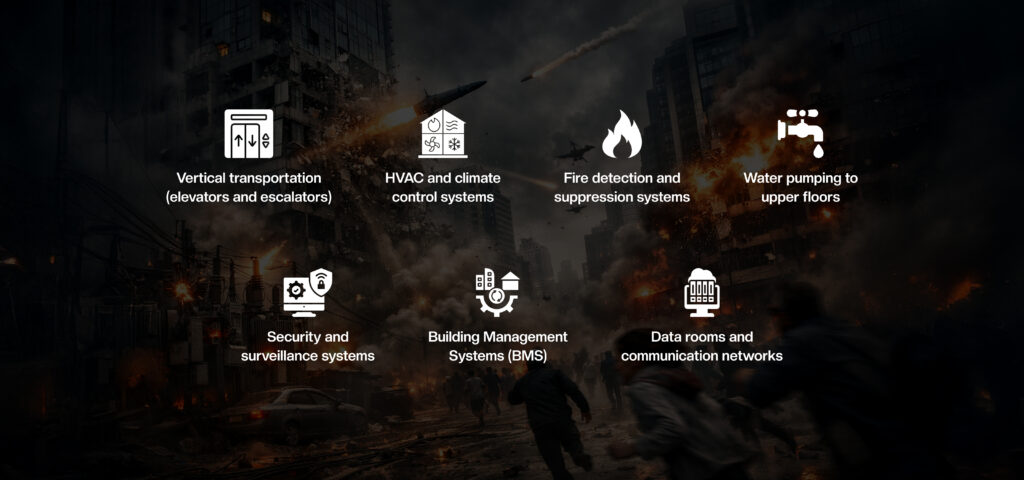
Tall buildings depend on continuous power for:
- Vertical transportation (elevators and escalators)
- HVAC and climate control systems
- Fire detection and suppression systems
- Water pumping to upper floors
- Security and surveillance systems
- Building Management Systems (BMS)
- Data rooms and communication networks
If power quality drops even for a few seconds, elevators may stall, control panels may reset, and automated systems may malfunction. During infrastructure stress, these risks increase significantly.
High-rise buildings are essentially vertical cities. When power is unstable, the entire ecosystem is affected.
A Real Scenario: What It Actually Looks Like
Imagine a 60-story residential tower during a regional power disturbance.
Within seconds:
- Elevators stall between floors
- The BMS system resets
- Water pumps stop cycling
- Security access systems reboot simultaneously
Residents are trapped in lifts. Water pressure drops on upper floors. Access-controlled doors temporarily fail. The control room receives multiple alarms at once.
There is no visible damage to the building. No explosion. No structural failure.
Just unstable power.
This is how electromagnetic risks manifest — quietly, rapidly, and system-wide.
Understanding Electromagnetic Risks
Electromagnetic Risks refer to disturbances that interfere with electrical and electronic systems. These can be caused by:
- Grid instability during conflict
- Damage to substations or transmission lines
- Lightning strikes
- Electromagnetic pulses (EMP)
- Harmonic distortion from overloaded networks
- Sudden voltage spikes or frequency shifts
In war scenarios, risks may arise from:
- Cyber-attacks on the power grid
- Substation damage
- Military EMP exposure
- Missile strikes causing grid disturbance
During war or regional instability, national power grids often operate under stress. Transmission systems may experience fluctuations, load imbalance, and transient over voltages. These disturbances travel directly into buildings through incoming supply lines.
High-rise towers, with extensive cabling and metallic structural frameworks, can unintentionally amplify these effects.
The Electrical Issues That Follow
When infrastructure becomes unstable, buildings begin to experience noticeable electrical issues.
These may include voltage sags, swells, breaker tripping, transformer overheating, and harmonic distortion. Sensitive equipment such as VFD drives, PLC controllers, server systems, and fire alarm panels are especially vulnerable.
The real concern is not just temporary shutdown — it is permanent damage.
Repeated power disturbances can shorten equipment life, increase fire risk, and compromise life-safety systems. In commercial towers, hotels, hospitals, and mixed-use developments, this creates both operational and safety challenges.
Is Your Uninterruptible Power Supply Enough?
Most high-rise buildings today install an uninterruptible power supply (UPS). But during severe electromagnetic disturbances, not all UPS systems perform equally.
A properly designed uninterruptible power supply should:
- Provide continuous double-conversion protection
- Stabilize voltage fluctuations
- Filter harmonics
- Integrate surge protection
- Offer sufficient battery backup time
In war-like scenarios, grid fluctuations are not simple blackouts — they are unstable power conditions. A basic UPS may not handle prolonged disturbances or repeated transients.
Life-safety systems, emergency lighting, communication hubs, and security control rooms depend on the reliability of that UPS.
If it fails, the building’s critical response systems fail with it.
The Role of Power Quality Monitoring
One of the most effective ways to manage electromagnetic risks is through power quality monitoring.
Many buildings only discover electrical problems after equipment fails. By then, the damage is already done.
Advanced monitoring systems track:
- Harmonic distortion levels
- Voltage imbalance
- Frequency variations
- Transient spikes
- Neutral-to-ground voltage changes
When integrated into the Building Management System, real-time power quality monitoring allows facility teams to detect abnormal patterns early.
It transforms electrical management from reactive to proactive.
EMP and Intentional Infrastructure Disruption
In extreme conflict scenarios, electromagnetic pulse (EMP) events — whether natural or intentional can disrupt electronic infrastructure.
Modern high-rise buildings rely heavily on microprocessor-based systems. Access control, lighting automation, HVAC regulation, and even water systems are digitally controlled.
EMP exposure can damage circuit boards, disrupt communication lines, and disable automation networks within seconds.
Mitigation does not require panic — it requires planning. Shielding critical rooms, improving earthing systems, installing multi-level surge protection devices, and separating sensitive circuits can significantly reduce vulnerability.
Electrical Hazard Prevention During Grid Instability
When power becomes unstable, secondary hazards increase.
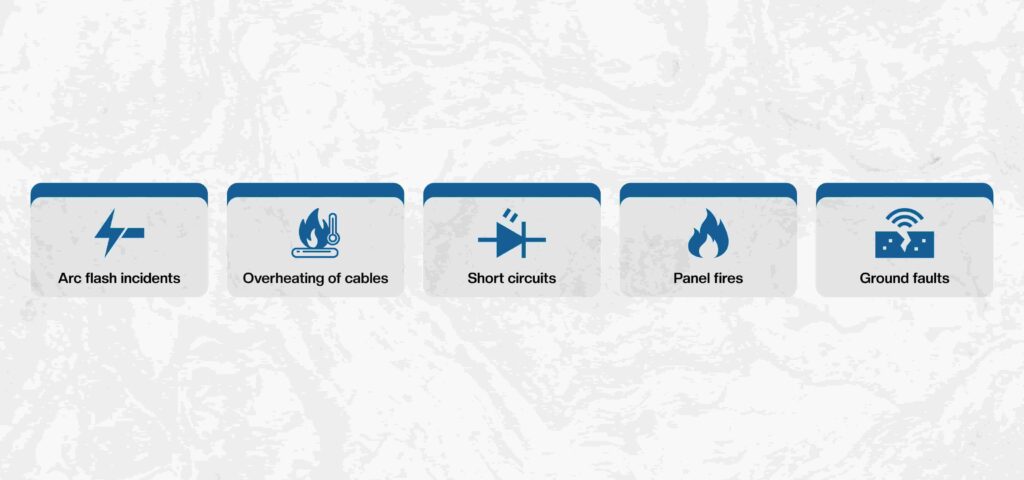
Electrical hazard prevention becomes critical because unstable supply can trigger:
- Arc flash incidents
- Overheating of cables
- Short circuits
- Panel fires
- Ground faults
Proper protection coordination ensures that a minor disturbance does not shut down the entire building. Regular thermal inspections, harmonic analysis, and protection studies help identify hidden weaknesses in the system.
Electrical resilience is built through design, not reaction.
Infrastructure Resilience Starts at the Design Stage
For developers and infrastructure planners, electromagnetic risk management should begin long before construction is completed.
Resilient high-rise design may include:
- Dual power feeds from independent substations
- Backup generators with load prioritization
- Dedicated UPS systems for life-safety circuits
- Advanced grounding and bonding systems
- Integrated power quality monitoring
- Smart load-shedding strategies
In regions experiencing geopolitical tension or rapid urban development, resilient electrical planning protects both occupants and long-term asset value.
A Simple Reality
If the external grid becomes unstable for just ten minutes, can your building:
- Maintain elevator operation safely?
- Keep fire protection systems fully active?
- Protect critical IT systems?
- Prevent electrical damage?
If the answer is uncertain, electromagnetic risk assessment is not optional — it is necessary.
Building the Future with Electrical Resilience
Tall buildings symbolize progress and innovation. But behind every iconic skyline is a complex electrical network that must remain stable under stress.
Electromagnetic Risks during war and infrastructure instability are real. They may not be visible like structural damage, but their impact can be immediate and severe.
By investing in:
- Reliable uninterruptible power supply systems
- Continuous power quality monitoring
- Strong earthing and surge protection
- Coordinated protection design
- Comprehensive electrical hazard prevention
high-rise buildings can move from vulnerability to resilience.
In an uncertain world, electrical preparedness is what keeps vertical cities running safely.

Conclusion
Electromagnetic risks in high-rise buildings are silent but highly disruptive, especially during war and infrastructure instability. Unlike visible structural damage, electrical disturbances can quickly disable life-safety systems, elevators, data networks, and critical operations. Preparing for unstable power conditions through reliable UPS systems, power quality monitoring, and strong earthing design is essential for resilience.
At Manav, we support tall buildings and infrastructure projects with electromagnetic risk assessment, advanced earthing solutions, power quality analysis, and electrical hazard prevention strategies — helping you build safer, stronger, and future-ready vertical developments.
– Author: Vigneshwaran S